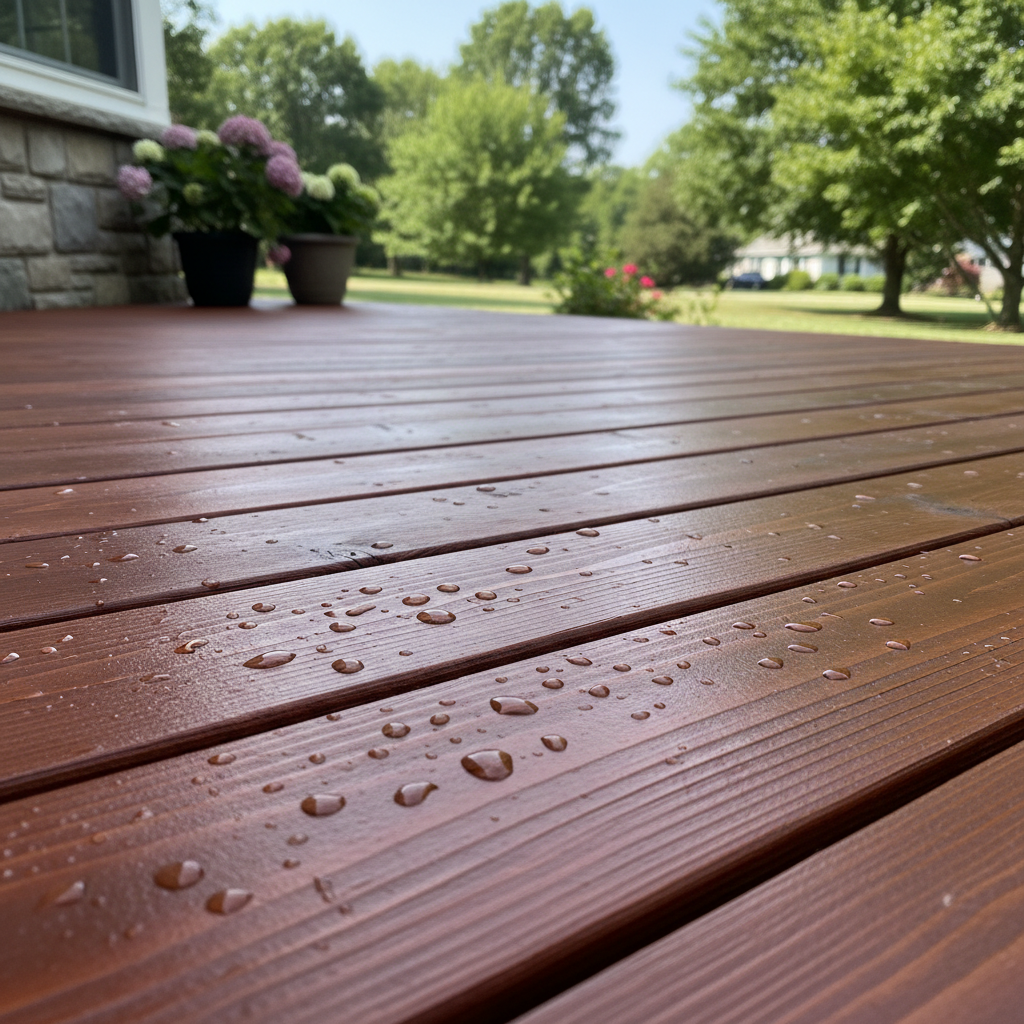
You've got a deck, and it's seen better days. Or maybe you're just looking to spruce it up. The big question always comes down to this: should you paint it or stain it? It’s not a simple answer, and honestly, what's right for your neighbor on Whitney Ave might not be right for your place down by the Sleeping Giant. I’ve been working on decks around Hamden for years, and these are the questions I hear most often.
What's the real difference between deck paint and deck stain?
This is where we start. Think of it this way: paint sits on top of the wood, forming a solid, opaque layer. It's like putting a coat on. Stain, on the other hand, penetrates the wood fibers. It soaks in, enhancing the natural grain rather than covering it up. There are different types of stains – clear, semi-transparent, semi-solid, and solid – but even solid stain still lets some of that wood texture show through, unlike paint.
Which one lasts longer in our Hamden weather?
Ah, the New England weather question. We get it all here, don't we? Hot, humid summers, freezing winters, and plenty of rain and snow. Generally speaking, a good quality solid stain or deck paint will offer similar durability in terms of protection from the elements. However, how they fail is different. Paint tends to chip, peel, and crack, especially on horizontal surfaces that get a lot of foot traffic and sun. Once it starts, it can look pretty bad. Stain, particularly semi-transparent or semi-solid, tends to fade and wear away more gracefully. It might look a bit dull, but you won't usually see big flakes peeling off.
For decks that get a lot of direct sun all day, like many homes in the Spring Glen area, I've seen paint break down faster because of the constant UV exposure and temperature swings. Stain, because it's absorbed, often holds up a bit better against UV fading, though it will still fade over time.
Is one easier to maintain or reapply than the other?
Absolutely. This is a big factor for most homeowners. When it comes to reapplication, stain wins, hands down. If you've got a stained deck, you usually just need to clean it thoroughly, let it dry, and then apply another coat of stain. You don't typically have to strip it all the way back to bare wood unless there's a major issue or you're changing color drastically.
Paint? That's a different story. If your deck paint starts peeling (and it will, eventually), you're looking at a lot more prep work. You'll need to scrape off all the loose paint, sand the surface smooth, prime it, and then paint. It's a much more labor-intensive process to get a good, long-lasting finish when repainting. If you don't do the prep right, the new paint will just peel off even faster.
Can I paint over a stained deck, or stain over a painted deck?
You can generally paint over a stained deck, but you need to do it right. The deck needs to be thoroughly cleaned, and any loose stain or wood fibers removed. Then, you'll need to apply a good quality exterior primer specifically designed for decks before painting. Don't skip the primer, or your paint won't adhere properly.
Going from paint to stain is much, much harder. Remember how paint sits on top? You can't just stain over paint because the stain won't be able to penetrate the wood. You'd have to strip all the paint off completely, back to bare wood, which is a massive undertaking. It's usually not worth the effort unless you're absolutely committed to a stained look and have a lot of time and patience, or you're hiring someone like Midway Decking to do the heavy lifting.
What about the look? Does one look better than the other?
This is purely personal preference. If you love the natural look of wood, with its grain and knots showing through, then stain is your friend. Clear and semi-transparent stains really highlight the wood's natural beauty. Semi-solid and solid stains will still let some texture show, but they offer more color.
Paint gives you a completely uniform, opaque color. If you want your deck to match your house trim, or you prefer a crisp, clean, solid color, then paint is the way to go. It can really transform the look of your outdoor space, making it feel more like an extension of your home. It can also hide imperfections in older wood better than stain can.
Is one option more expensive?
Initially, the cost of materials for paint and stain can be pretty similar, though some premium stains might be a bit more. Where the cost really differs is in the labor, especially over the long term. As I mentioned, repainting a deck with peeling paint is a much bigger job than re-staining. So, while the upfront cost might be comparable, the long-term maintenance cost for a painted deck can be higher due to the intensive prep work required for reapplication.
Any final advice for Hamden homeowners?
Think about the condition of your deck wood. If your deck is older, has a lot of blemishes, or you're dealing with different types of wood that don't match, paint can be a great way to unify the look and hide those imperfections. If you have beautiful, newer wood that you want to show off, stain is definitely the way to go.
Also, consider how much time you're willing to put into maintenance. If you want something that's relatively easy to refresh every few years, lean towards stain. If you don't mind the occasional big prep job for a perfectly uniform, solid color, then paint might be for you. No matter what you choose, proper cleaning and preparation are key to making either option last. Don't skimp on that step!